
The “Unblockable” Upsell: How to Recover Revenue Lost to Privacy Browsers and Ad Blockers
Ad-blockers are killing your AOV. Learn why Native UI Extensions are the only "unblockable" upsell solution
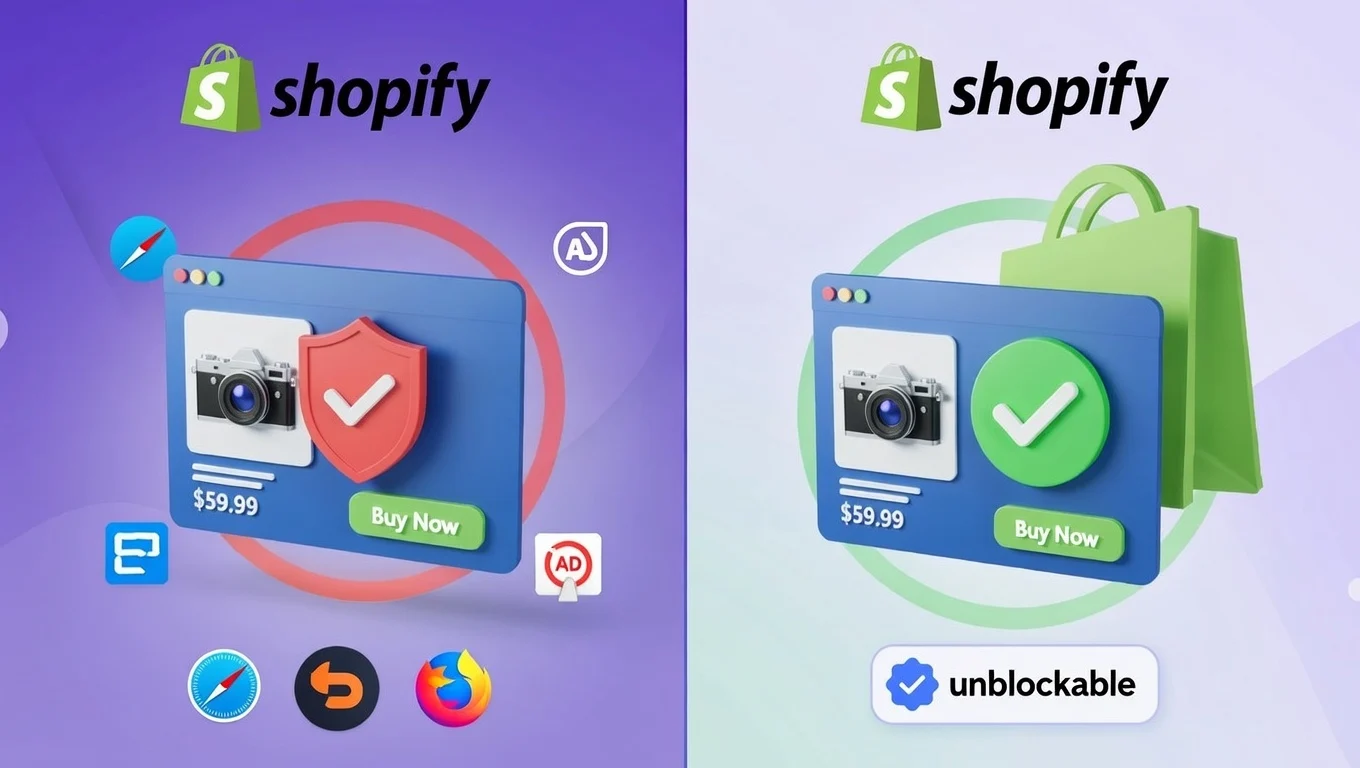
If you run a high-volume Shopify Plus store right now, there’s a good chance you’re feeling a quiet kind of frustration. Traffic is solid, checkout starts to look healthy, but upsell seems flat. It’s easy to think that your customers don’t like the offers. But the real issue is that a large portion of your customers never see the offer at all because the upsell was blocked before it was rendered.
For high-growth Shopify Plus merchants, conversion rate optimization matters, yet a slice of your audience has become invisible due to privacy-first browsers and ad-blocking software. And it’s happening right at the most valuable moment in the funnel: checkout. This phenomenon is known as revenue-ghosting, which is the gap between the number of customers that start checkout and how many are actually shown your upsell offer.
So if your upsell strategy depends on third-party scripts firing perfectly in checkout, you’re gambling on browser behavior you don’t control and modern browsers are designed to block first and ask questions later.
That’s Revenue Ghosting. And it’s happening at scale.
Why Ad Blockers and ITP Kill Upsells
To understand why this problem exists, you have to look at how modern privacy tools actually work. Ad blockers like uBlock Origin, along with privacy-focused browsers such as Brave, DuckDuckGo, and Safari with Intelligent Tracking Prevention (ITP) prevent cross-site tracking.
To do that, they aggressively target anything that looks like an external JavaScript and third-party script that attempts to observe, track, or modify user behavior across sites, especially in checkout.
How legacy upsell apps actually work
Most traditional Shopify upsell apps rely on script injection. They load JavaScript from the app developer’s own domain and inject it into the Shopify checkout page. That script is responsible for rendering the upsell offer, tracking impressions, and capturing conversions.
Technically, this makes the upsell logic a third-party resource. When a customer reaches checkout using a privacy-first browser or an ad blocker, that external script is evaluated before it runs. If it matches known tracking patterns, originates from a third-party domain, or attempts client-side behavioral tracking, it’s blocked outright.
This means that they continue through checkout completely unaware that an offer was supposed to exist. From the merchant’s perspective, the upsell “fails” even though nothing appears broken and this reflects in the analytics.
You see the checkout complete, but you don’t see the upsell impression, which makes you assume that the offer didn’t convert. Whereas, in reality, the offer never existed for that customer.
Script injection vs native checkout rendering
The core issue is where the code comes from. Browsers make a hard distinction between:
- First-party content (served from the site’s own domain), and
- Third-party scripts (served from external domains)
Legacy upsell apps live entirely in the second category while native Checkout UI Extensions live in the first. Here’s how privacy tools treat legacy apps versus native checkout extensions in practice:
Native Checkout UI Extensions are rendered as part of Shopify’s own checkout environment. The code is served directly from Shopify’s domain and executed within a sandboxed, first-party context.
For an ad blocker to suppress a native upsell, it would need to block Shopify checkout itself, which would break the purchasing experience entirely. That’s not something browsers or blocker lists can do without harming users. So they don’t.
Why this matters for revenue
For merchants, the real impact of this upgrade is financial. When 15–25% of checkout sessions never see your upsell:
- Your reported conversion rate is artificially low
- Your A/B tests are polluted with missing data
- Your AOV ceiling is capped before optimization even begins
Merchants who continue to rely on third-party script injection are accepting a delivery mechanism that modern browsers are actively designed to neutralize.
Why Merchants Are Searching for “Native vs. Third-Party”
If you look at how Shopify Plus merchants search today, you’ll notice a pattern. Search terms like “shopify privacy-first marketing” and “native vs third party shopify apps” signal a real shift in how serious merchants think about their stack. The mindset has changed from “Does this app have features?” to “Will this still work six months from now?”
Sophisticated merchants understand that any revenue system built on fragile, client-side scripts is now a liability. Shopify understands this too.
That’s why checkout.liquid was deprecated and Checkout Extensibility became mandatory. This was Shopify’s way of formally acknowledging that checkout is too critical to be modified by external scripts that browsers are actively trained to distrust. For Shopify, this shift improves security, performance and compliance. For the merchant, it restores reliability.
The Unblockable Solution: How Native UI Extensions Work
Once you understand the problem, the next step is to make upsell unblockable. If third-party scripts are the thing getting blocked, the fix is to remove them from the equation entirely. That’s exactly what Cart-X does by building on Shopify Native Checkout UI Extensions.
Instead of injecting JavaScript from an external server, Cart-X renders upsell offers as native checkout components, delivered directly through Shopify’s own infrastructure. The upsell isn’t layered on top of checkout. It is now part of checkout.
The Technical Proof of Un-blockability
Ad blockers and privacy browsers can’t selectively remove Cart-X for one simple reason: Blocking Cart-X would mean blocking Shopify checkout itself. Ad blockers only block third-party scripts that look like tracking or external execution, and Cart-X does not fall into that category.
- First-party status
Browsers treat Cart-X offers as first-party content. To block it, a browser would have to block Shopify’s own checkout components. That would break checkout entirely, which no privacy browser is willing to do.
- Server-side rendering (SSR)
The offer logic runs on Shopify’s servers, not in the customer’s browser. There’s no external JavaScript trying to execute on the client, which means nothing for Intelligent Tracking Prevention or Enhanced Tracking Protection to intercept.
- Guaranteed visibility
When a customer initiates checkout, the upsell offer is rendered as part of the page’s core structure. It loads when checkout loads every time, on every browser, regardless of privacy settings.
This is what ad blocker proof upsells means that it is structurally impossible to block without breaking checkout itself.
Measuring the Visibility Lift: KPIs for Recovered Revenue
The nice thing about fixing an architectural problem is that the results show up immediately in the numbers. There are two metrics that you can use to assess that:
- Checkout Starts: The number of sessions that reach checkout.
- Upsell Offer Impressions: The number of times your post-purchase offer is actually shown.
In a healthy system, these numbers should track closely together. With legacy, third-party apps, they often don’t. If 10,000 customers start checkout but only 6,000 see an upsell offer, you’re not dealing with a conversion issue. You’re dealing with a 40% visibility gap. That’s revenue you never had the chance to earn.
When merchants migrate to Cart-X, this gap collapses. Because the offer is native, impressions align almost perfectly with checkout starts.
That alignment is your Shopify checkout visibility lift.
And it’s often the fastest “AOV increase” a store ever sees because you’re not persuading more customers. You’re finally reaching the ones who were already there.
The Future of Privacy-Proof Upselling
The web has changed, and so have shopper’s expectations. What hasn’t changed is the value of the post-purchase moment. The difference in 2026 is that only native, first-party upsells reliably reach that moment. Fragile script injection belongs to an earlier era.
This leaves you with two options: You can either build revenue systems that depend on scripts modern browsers are trained to block. Or you can build on native infrastructure designed to survive every privacy shift ahead.
Cart-X is built for the second path. By making upsells a native, unblockable part of the checkout experience, Cart-X helps merchants recover lost visibility, restore trust, and create predictable post-purchase revenue without fighting browsers, customers, or compliance rules.
Don't miss out on expert e-commerce and marketing insights! Subscribe to our newsletter for valuable tips in just a few clicks.

.svg)


